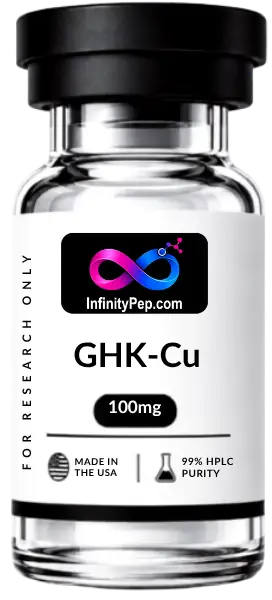
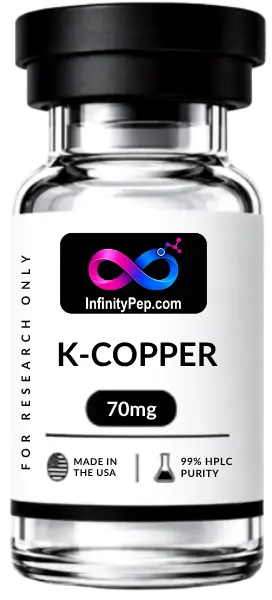
K-Copper
GHK-Cu: GHK-Cu is the copper(II) complex of the naturally occurring tripeptide glycyl-L-histidyl-L-lysine, which has a high affinity for copper ions. It has been studied in cell-culture and animal models of extracellular-matrix synthesis, tissue remodeling and gene expression.
For in-vitro laboratory research only. Not for human or veterinary use.
Reference data
Lab reports
Storage & handling
Store lyophilized material at -20°C, protected from light and moisture.
Handle in a laboratory setting using appropriate personal protective equipment.
Questions about K-Copper
What is K-Copper?
GHK-Cu: GHK-Cu is the copper(II) complex of the naturally occurring tripeptide glycyl-L-histidyl-L-lysine, which has a high affinity for copper ions. It has been studied in cell-culture and animal models of extracellular-matrix synthesis, tissue remodeling and gene expression.
What is the CAS number of K-Copper?
The CAS registry number of K-Copper is 89030-95-5.
What is the molecular formula and weight of K-Copper?
Molecular Formula: C14H22CuN6O4. Molecular Weight: 401.91 g/mol.
How is K-Copper tested?
Every lot of K-Copper is analysed by an independent, third-party laboratory using HPLC for identity and purity. The Certificate of Analysis for each lot — lot number, test date and result — is published and listed on this page.
How should K-Copper be stored?
Store lyophilized material at -20°C, protected from light and moisture.
Is K-Copper for human use?
No. K-Copper is sold strictly for in-vitro laboratory research by qualified researchers aged 21 and over. It is not for human or veterinary use and is not a drug, food, supplement or cosmetic.